 Proudly Serving Charleston & Surrounding Areas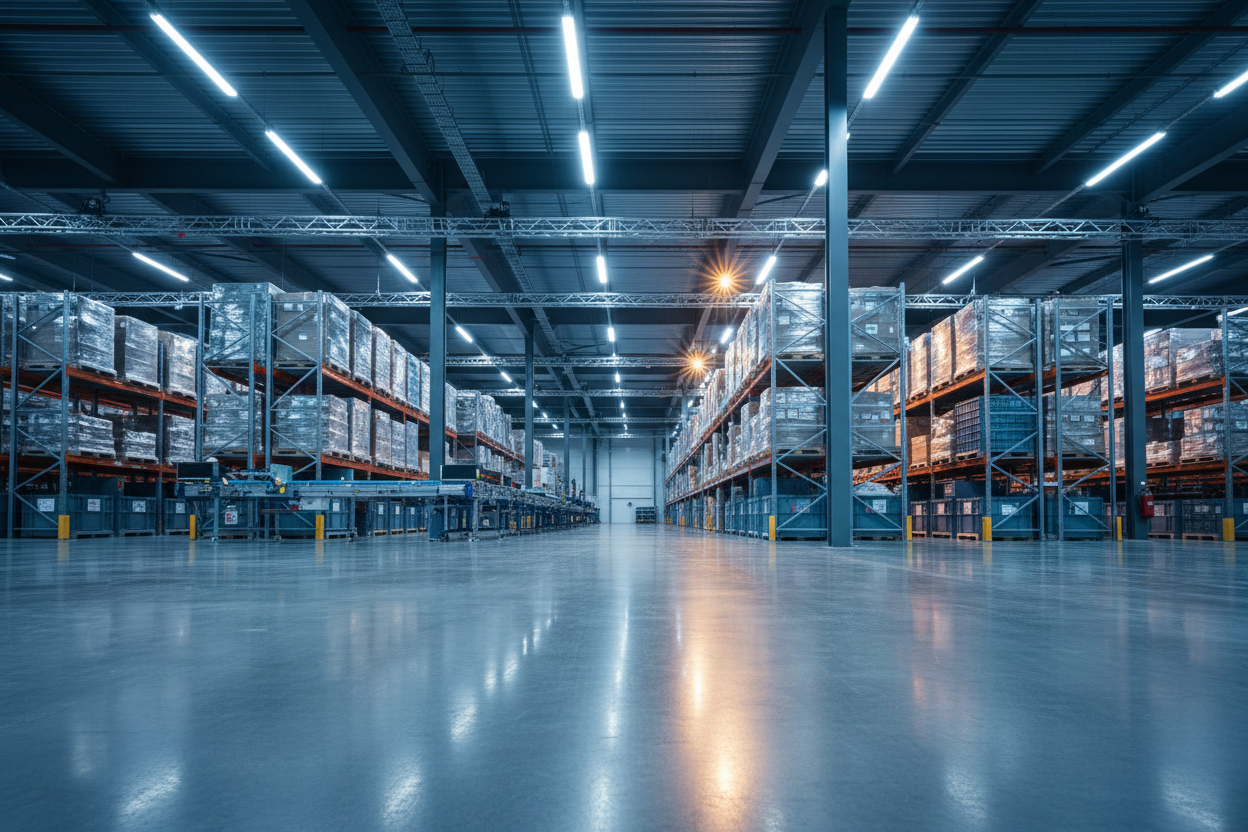
High-bay floor cleaning at scale
Warehouse and distribution center floors in Charleston typically run 50,000 to 500,000+ square feet of polished concrete or sealed concrete with heavy forklift and pallet-jack traffic. Hand mopping or push scrubbers are economically infeasible at this scale — high-bay industrial work requires ride-on auto-scrubbers with appropriate solution-delivery and recovery systems.
Our industrial floor protocol uses ride-on auto-scrubbers calibrated to concrete sealer type, with cleaning frequency calibrated to traffic patterns. High-traffic main aisles typically get nightly scrubbing; low-traffic perimeter and rack aisles get weekly. Quarterly deep-cleaning layers include polished-concrete burnishing for facilities maintaining decorative concrete finishes.
Loading dock and yard area cleaning
Loading docks generate cleaning challenges that office facilities don’t. Diesel residue from tractor-trailer staging, hydraulic fluid drips from forklifts and dock equipment, packaging debris from receiving and shipping operations, and weather-tracked dirt from outdoor staging all accumulate on dock plates and dock-adjacent floor areas.
Our dock cleaning protocol layers in pressure washing of dock plates and seal areas (typically monthly), absorbent treatment of hydraulic and oil residue, and degreaser scrubbing of staging zones. We also coordinate with facility operations on dock plate inspection — we frequently spot dock seal damage, plate damage, or trip hazards that warehouse management should know about.
Port-adjacent logistics: salt air and humidity
Charleston port-adjacent facilities face two environmental factors that inland industrial facilities don’t: salt air and high humidity. Salt accelerates corrosion on metal racking, dock equipment, and HVAC components. Humidity accelerates mold and biofilm formation on breakroom and restroom surfaces.
Our port-adjacent protocol includes additional attention to metal-surface wiping (preventing salt-driven corrosion), HVAC return-grille wiping (reducing salt and humidity recirculation), and accelerated restroom and breakroom cleaning frequency (twice weekly deep-clean layers rather than the weekly standard for inland facilities). The cumulative effect is meaningfully extended equipment life and consistently inspection-ready conditions.
OSHA-compliant industrial cleaning protocols
Industrial cleaning operates under more demanding safety requirements than office cleaning. Our crews complete OSHA general industry safety training, are trained on warehouse-specific hazards (forklift traffic, racking, dock plates, wet-floor management), and operate under written safety protocols specific to each facility.
We coordinate with facility EHS managers on cleaning windows that minimize traffic-cleaning conflicts, use OSHA-compliant wet-floor signage during scrubbing operations, and document all cleaning activities for facility safety records. For facilities subject to specific regulatory requirements (food-grade, GMP, ISO), we adjust protocols and documentation to support compliance.
Areas regularly serviced
Active Charleston industrial routes include the upper peninsula industrial corridor, the port-adjacent logistics zone, the Mt. Pleasant industrial parks, the West Ashley industrial corridor, and the airport-adjacent logistics district. ZIP codes 29403, 29405, 29406, and 29418 are core to our weekly Charleston industrial route.