Proudly Serving Charleston & Surrounding Areas
Medical cleaning goes beyond standard janitorial work. Facilities that handle patient care must follow overlapping federal regulations and guidelines that protect both worker safety and patient privacy. For healthcare facility managers in the Charleston area, understanding how OSHA standards, HIPAA privacy rules, and CDC disinfection protocols apply to cleaning operations is essential for maintaining a safe, compliant environment. This article outlines the core requirements for medical cleaning under these frameworks, helping you evaluate your current practices or select a qualified cleaning partner.
Understanding the Overlapping Frameworks
Three major bodies of regulation and guidance apply simultaneously in healthcare cleaning: OSHA, HIPAA, and the CDC. Each addresses a different aspect of safety and compliance. OSHA focuses on worker protection, particularly from bloodborne pathogens and other occupational hazards. HIPAA protects patient privacy by controlling access to Protected Health Information (PHI). The CDC provides evidence-based disinfection protocols to prevent healthcare-associated infections. Cleaning protocols must integrate all three sets of requirements. This means a single cleaning procedure may need to satisfy OSHA's PPE rules, HIPAA's privacy safeguards, and CDC's contact time standards for disinfectants.
OSHA Bloodborne Pathogens Standard and Worker Safety
OSHA's Bloodborne Pathogens Standard (29 CFR 1910.1030) is the primary regulation for cleaning staff in healthcare settings who may come into contact with blood or other potentially infectious materials. This standard requires employers to develop an Exposure Control Plan, implement Universal Precautions, provide appropriate Personal Protective Equipment (PPE), offer the Hepatitis B vaccination series at no cost to employees with occupational exposure, and conduct annual training. All contaminated work surfaces must be decontaminated after completion of procedures. OSHA penalties for serious violations can be up to $15,625 per violation, with willful or repeated violations reaching up to $156,259 per violation. These amounts come from industry sources and should be verified with the official OSHA website for current figures.
- Exposure Control Plan documenting tasks, hazards, and protective measures.
- Universal Precautions treating all blood and body fluids as potentially infectious.
- PPE including gloves, gowns, masks, and eye protection as needed.
- Hepatitis B vaccination offered free to at-risk employees.
- Annual bloodborne pathogens training for all staff with occupational exposure.
HIPAA Privacy Safeguards for Cleaning Staff
HIPAA does not directly regulate cleaning methods or frequency, but it imposes privacy safeguards that affect how cleaning staff operate. If cleaning personnel may access areas where PHI is present, the cleaning company must sign a Business Associate Agreement (BAA) with the healthcare facility. This contract outlines responsibilities for protecting PHI. In addition, cleaning staff must receive awareness training on what constitutes PHI and how to report any incidents of accidental exposure. One recommended practice is an "Avert Eyes" policy, where staff avoid intentionally viewing patient information on screens, documents, or labels. These measures help prevent privacy breaches while cleaning exam rooms, waiting areas, or administrative offices.
HIPAA-compliant cleaning also involves secure waste management. General waste, biohazard waste, and materials that may contain PHI must be properly segregated. Shred bins should be used for any documents that could include patient information. Cleaning staff should not handle document disposal themselves unless explicitly trained and authorized; facility staff typically manage that task.
CDC Disinfection Protocols in Healthcare Settings
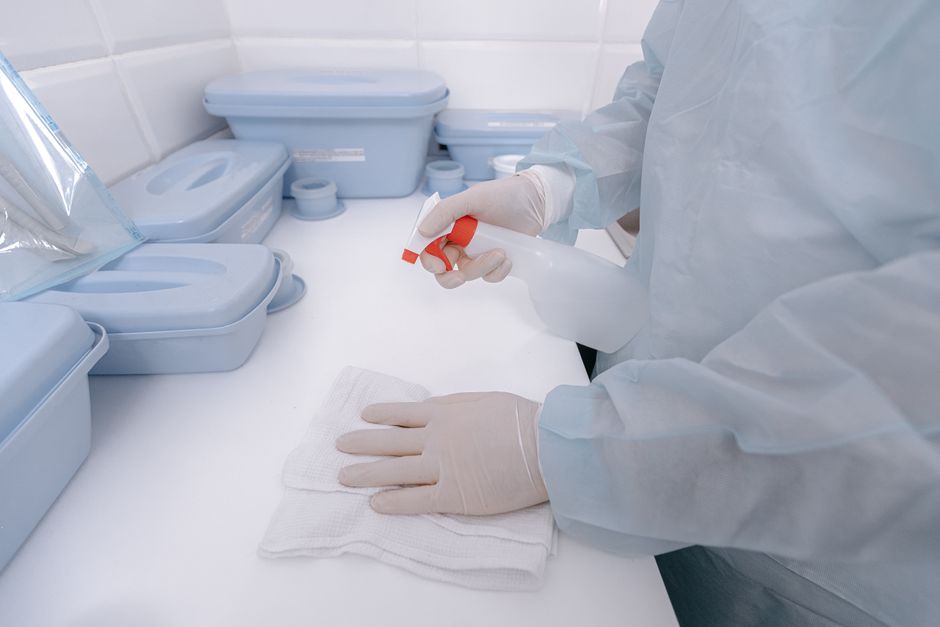
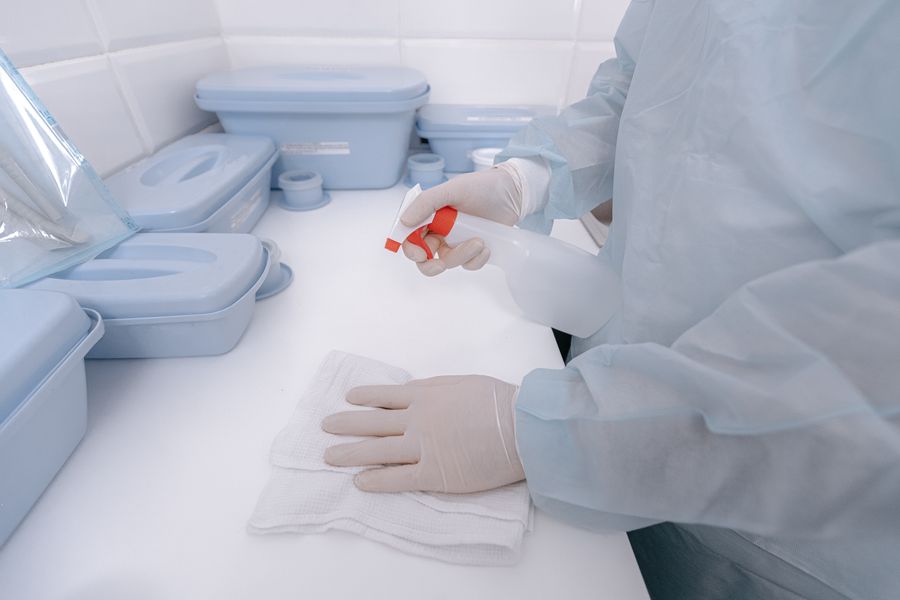
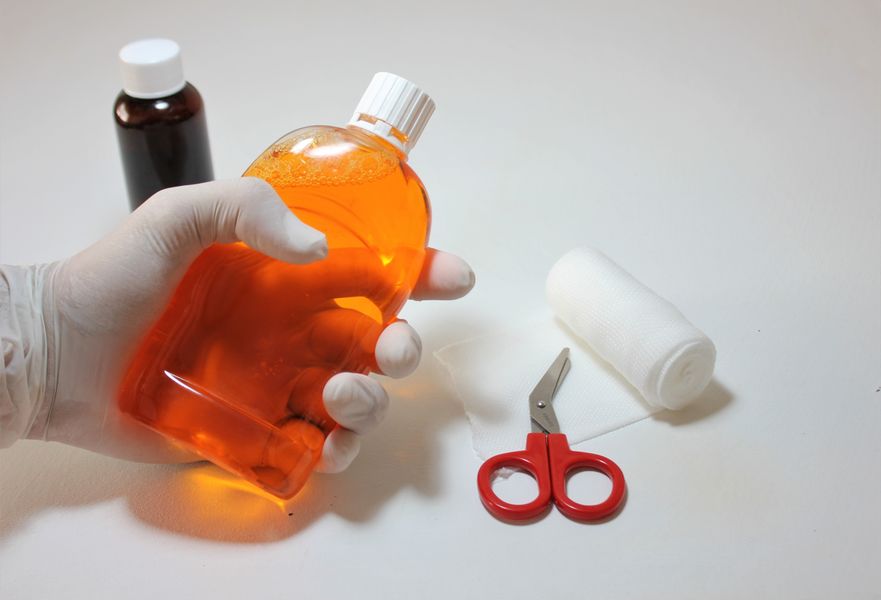
The CDC provides guidelines (not legally enforceable regulations like OSHA) for disinfection in healthcare facilities. These guidelines are widely adopted as standard practice. They recommend cleaning high-touch surfaces at least daily using EPA-registered hospital-grade disinfectants. High-touch surfaces include doorknobs, light switches, bed rails, call buttons, and countertops. A critical step is the two-step process: dirty surfaces must be cleaned with a detergent or cleaner before disinfection can be effective. Disinfectants require a specific contact time (dwell time) to kill pathogens; staff must follow product label instructions.
The CDC categorizes environmental surfaces into three groups:
- Medical equipment surfaces (e.g., monitors, IV pumps) – cleaned between patient uses.
- Housekeeping surfaces (e.g., floors, walls) – cleaned on a routine schedule.
- Minimal touch surfaces (e.g., ceilings, window blinds) – cleaned less frequently.
Each category has different cleaning frequencies and methods. Cleaning staff must know these distinctions to avoid damaging equipment or missing critical disinfection steps.
Employee Screening and Training Requirements
Medical cleaning requires thorough employee screening. Cleaning companies working in healthcare facilities must conduct criminal background checks and drug testing on all staff who will access patient areas. These vetting processes help ensure that only trustworthy personnel are allowed into sensitive environments. Training is equally important. Beyond OSHA-required annual bloodborne pathogens training, staff must receive HIPAA awareness training on protecting PHI. A comprehensive training program should cover proper use of PPE, correct disinfection procedures, waste segregation, and protocols for reporting breaches or exposures. Regular refresher training helps maintain compliance as regulations change or new staff join the team.
Frequently Asked Questions
What is a Business Associate Agreement in medical cleaning?+
A Business Associate Agreement (BAA) is a contract between a healthcare facility and a cleaning company. It is required under HIPAA if cleaning staff may access Protected Health Information (PHI). The BAA outlines each party's responsibilities for safeguarding PHI, including training, reporting, and breach notification.
What training do medical cleaning staff need?+
Staff need annual bloodborne pathogens training under OSHA, HIPAA awareness training on recognizing and protecting PHI, and practical instruction on disinfection protocols from CDC guidelines. Additional training on PPE use, waste segregation, and emergency procedures is also common. Employers must document all training.
What are the penalties for OSHA violations in medical cleaning?+
OSHA penalties for serious violations can reach up to $15,625 per violation. Willful or repeated violations can carry penalties up to $156,259 per violation. These figures are from industry sources and may change. Healthcare facilities and cleaning companies should consult the official OSHA website for current penalty amounts.
Are CDC disinfection guidelines legally enforceable?+
CDC guidelines are not legally enforceable regulations like OSHA standards. However, they are considered the standard of care in healthcare settings. Following CDC protocols helps reduce infection risks and may be used as evidence of due diligence during audits or litigation. Many accreditation bodies require adherence to these guidelines.
How do cleaning staff avoid exposing PHI during their work?+
Staff should follow an "Avert Eyes" policy, meaning they avoid looking at screens, documents, or labels that may contain patient information. They should not handle paper records or dispose of documents unless specifically trained and authorized. Any accidental exposure to PHI must be reported immediately to the facility privacy officer.
Partner With a Compliant Charleston Medical Cleaning Team
Preferred Services Group provides OSHA-compliant, HIPAA-aware medical cleaning across Charleston, North Charleston, Summerville, Goose Creek, and Moncks Corner. Our crews are background-checked, trained annually on bloodborne pathogens and PHI safeguards, and use EPA-registered hospital-grade disinfectants applied with proper dwell times. Request a free compliance walkthrough to see how we align with OSHA, HIPAA, and CDC expectations.
Ready for a Spotless Facility?
Get a free, customized commercial cleaning quote for your Charleston-area business.
Request a Free Quote